Core one

Most entrepreneurs do not fail because they lack answers.The decision collapses.

The data is incomplete.It does not quite add up. You decide anyway.
It does not feel right.You ignore the gut, and the signals your body is sending. You decide anyway.
The clock is running.You decide anyway.
Led by Fariza Javed · The Alchemist
The cost

Decision-making is the last untrained function in business.

Strategy, marketing and finance all get systems. The decision itself does not.

98%

of managers did not apply decision best practices

Forbes, study of 500 managers and executives
530,000

days of manager time lost per year to slow decisions

McKinsey, 1,200+ global business leaders
6×

more good decisions when best practices are applied

Forbes
95%

correlation between decision effectiveness and financial performance

Bain, quoted in Forbes
Sources as cited. Brandscaling's own position, offered as interpretation rather than research finding: for an entrepreneur scaling past the first million, an unestablished decision loop is the constraint that holds everything else back. We have not measured that, and we do not present it as a study.
Your goals do not determine your success. The strength and stability of your decision loop does.
The premise Decision Intelligence is built on
Why it collapses

Seven ways the loop breaks.

None of them is a capability failure. Every one is a decision-loop failure.
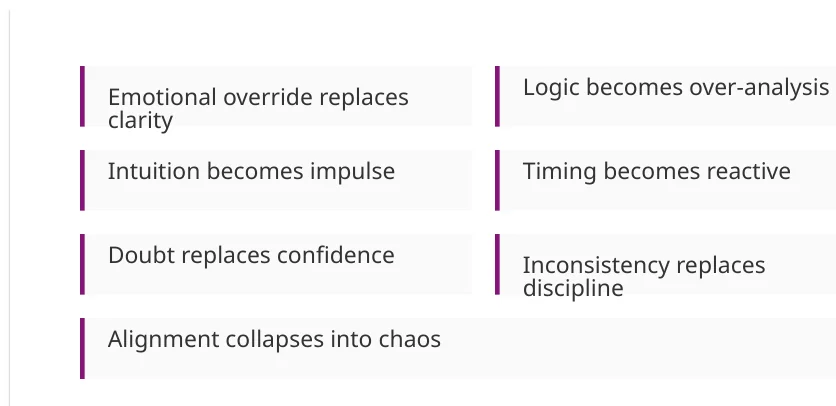
The seven failure patterns: emotional overload replaces clarity, intuition becomes impulse, doubt replaces confidence, alignment collapses into chaos, logic becomes over-analysis, timing becomes reactive, inconsistency replaces discipline.
Under pressure, the process breaks before the decision is made.
The decision loop

You run one of two loops.

It is not a personality type. It is how your decisions get produced.

The Architect

Logic → Feeling → Logic
Logic first

Logic originates. Feeling validates. Logic makes the final call.

  • Clarity and repeatability
  • Scale through process
  • Crisp trade-offs

Watchout. Under pressure, analysis can lock and the plan hardens.

The Alchemist

Feeling → Logic → Feeling
Feeling first

Feeling originates. Logic structures. Feeling makes the final call.

  • Vision and synthesis
  • Brand and narrative
  • Breakthrough ideas

Watchout. Under pressure, the story can jump and the detail goes missing.

Both are powerful when stabilised. Neither is better. There is no hierarchy between logic and feeling.
When neither dominates

Mixed is not a third loop.

There are two loops. Mixed means neither is established, so you switch under pressure instead of building one.

How it happens

Socialisation, corporate conditioning, years of firefighting, or masking to fit an old incentive.

What it costs

It reads as inconsistency and second-guessing. Left long enough, it erodes strategy and trust.

Why it is good news

Nothing is broken. It is unestablished, and that makes it the most fixable finding on the assessment. The work is not to manage the switching. It is to find which loop is yours, and build it.

The mechanism

Three intelligences. One decision.

Brain logic, heart insight, gut instinct. Each contributes what the others cannot.
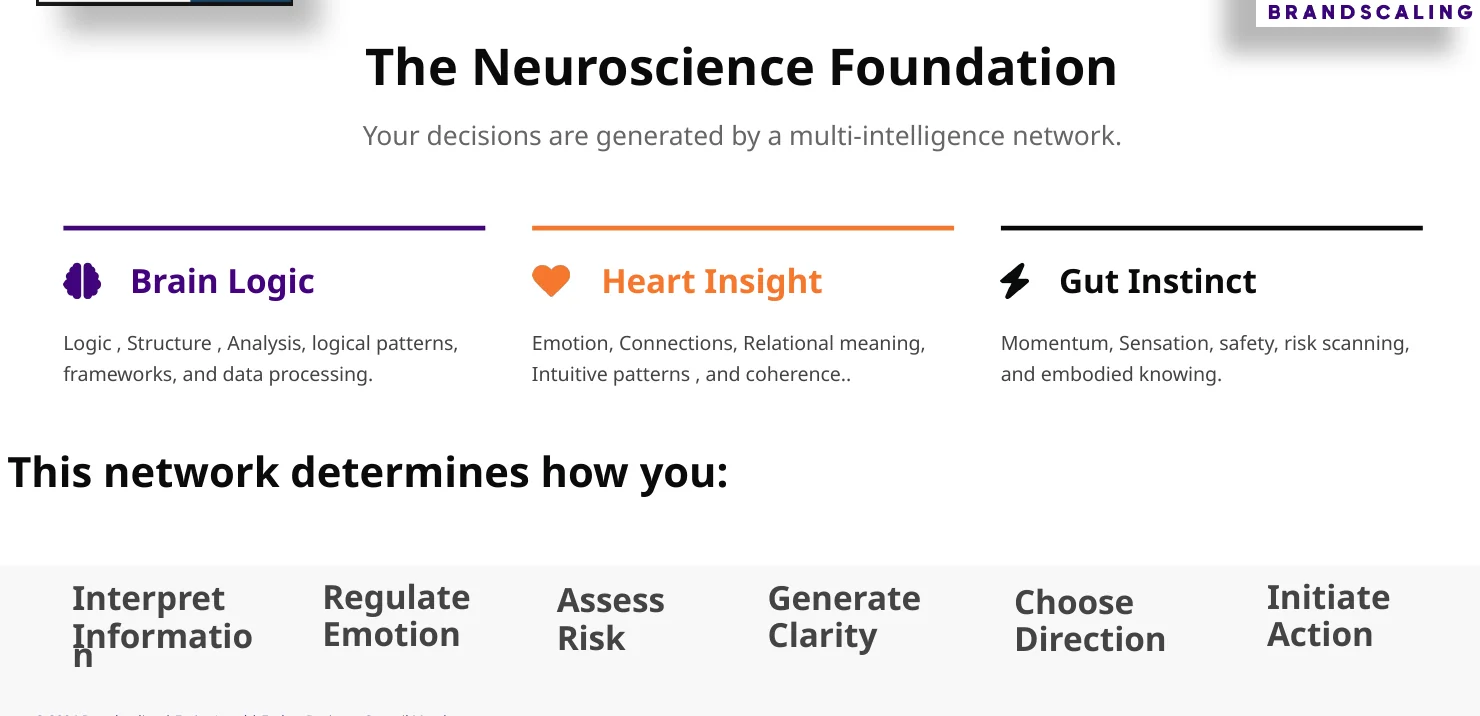
Brain logic, heart insight and gut instinct, and the six functions this network determines: interpret information, regulate emotion, assess risk, generate clarity, choose direction, initiate action.
This network sets how you interpret, regulate, assess, choose and act.
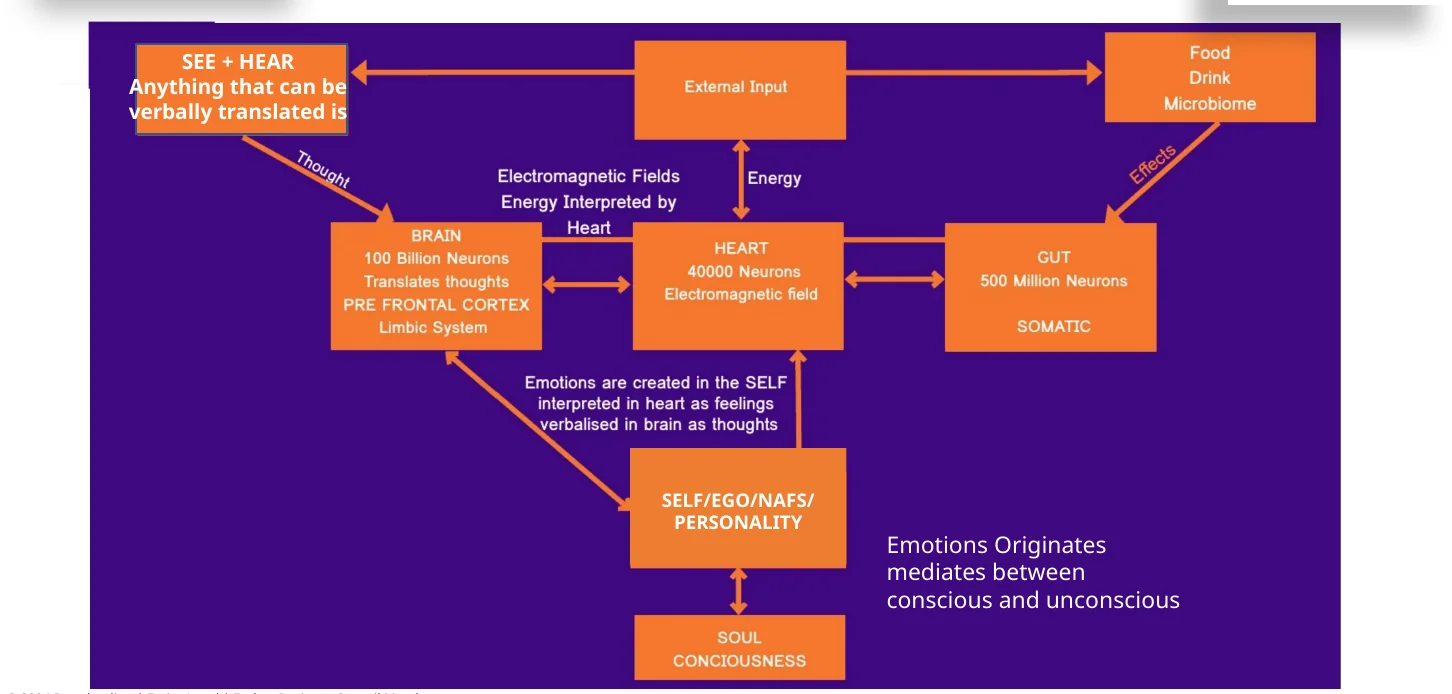
The Human Intelligence Network Diagram: brain, heart and gut as one connected system with external input, self and ego, and consciousness.
100 billion neurons in the brain. 40,000 in the heart. 500 million in the gut.
The profile

Seven layers. One profile.

E-DNA maps how you actually decide. Not who you want to be. Not who you think you are.
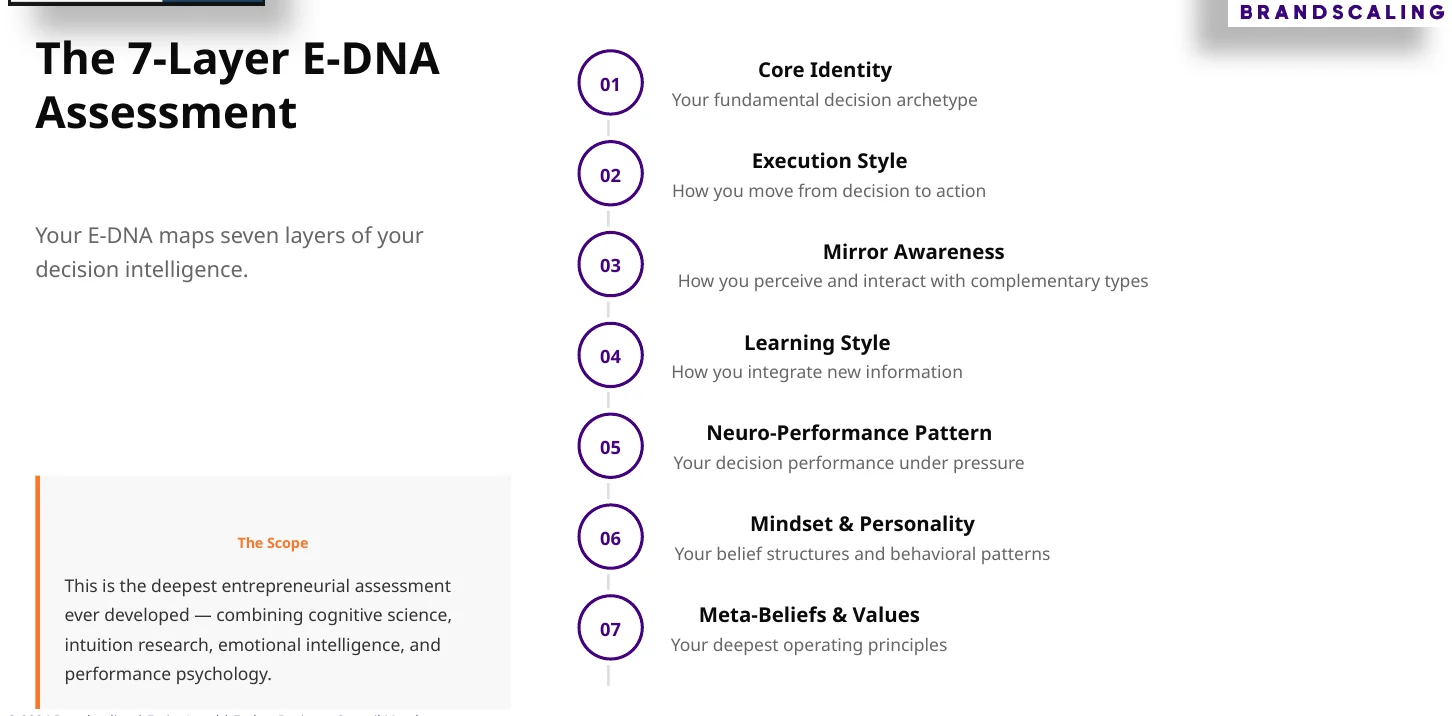
The seven layers of the E-DNA assessment: core identity, execution style, mirror awareness, learning style, neuro-performance pattern, mindset and personality, meta-beliefs and values.
Seven layers, each answering a different question.
How it works

Three steps. Then you can see it.

01

Assess

45 questions. 30 to 40 minutes. Answered instinctively, from how you operate now.

02

See

Seven layers mapped. Your loop, your stability, your triggers, your path to action.

03

Practise

Log 5 to 7 real decisions against six questions. The pattern shows by the fifth.

Day 7

Your first signal

You know what activates first, and what makes you switch.

Day 14

Your validator

You know which one you trust when the call has to be made.

Day 30

Your strategy

Four commitments. Fewer mistakes, less overthinking.

Day 90

Your system

Fast, confident decisions. Something you can delegate against.

An assessment alone changes nothing. The log is what changes the loop.
What you get

A profile you can act on.

Your decision profile

Core type, Architect and Alchemist breakdown, your primary mode.

Where your loop holds

Stability points, instability triggers, how you read pressure.

How you process

Your path from thought to action, so advice lands in a form you use.

What to do next

Your adaptation switches and the first seven days.
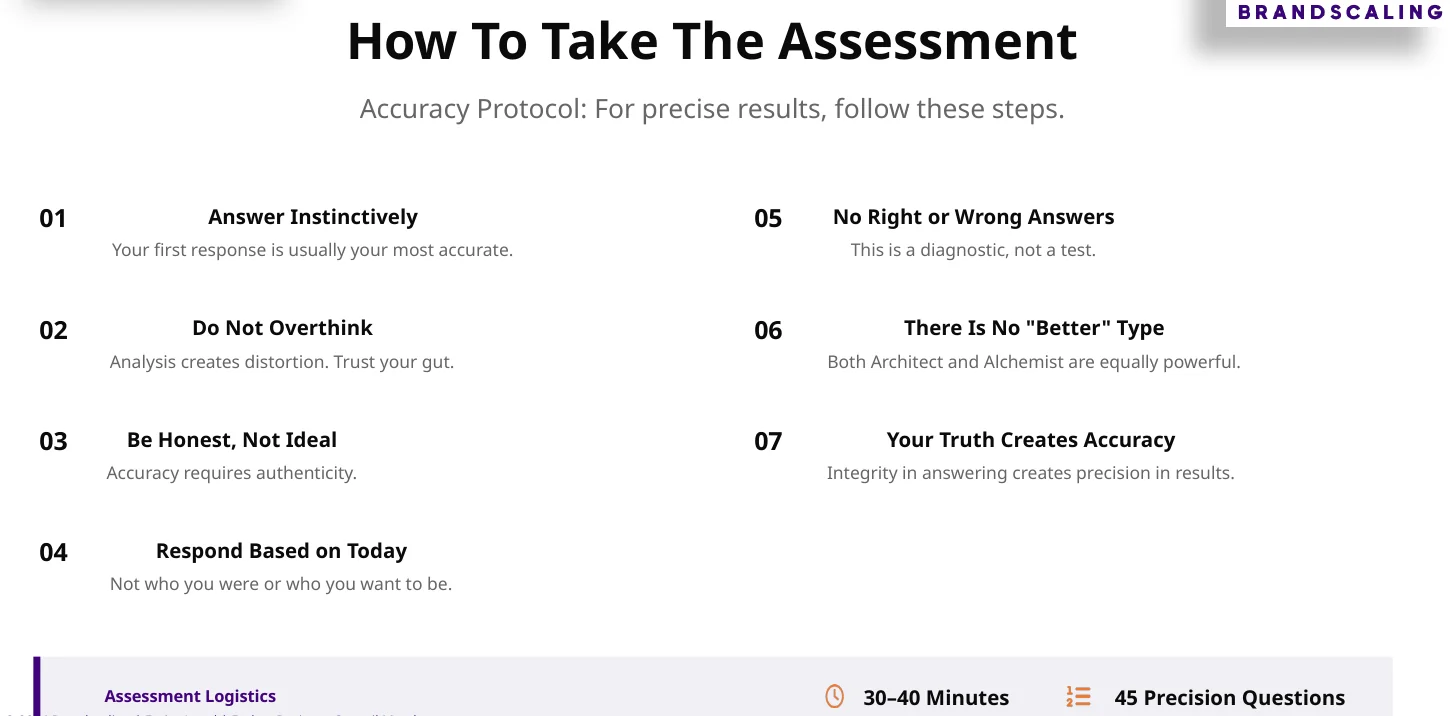
How to take the assessment: answer instinctively, do not overthink, be honest not ideal, respond based on today, no right or wrong answers, there is no better type, your truth creates accuracy. 30 to 40 minutes, 45 precision questions.
Answer instinctively. There is no revision and no scoring.
Your strategies

Four moves, matched to your loop.

Each one aims at your blind spot, not your strength.

Architect

You are strong on structure. The gap is the soft signal, and the speed.

  • Stop re-modelling decisions you can already compute.
  • Write the felt sense down and test it as data.
  • Build frameworks you reuse, so each decision is not a fresh build.
  • Pair with an Alchemist.

Alchemist

You read the room. The gap is the constraint, and the language.

  • Trust the gut, then validate it.
  • Use logic to test the call, not replace it.
  • Give the intuition words so others can act on it.
  • Pair with an Architect.

Mixed

You switch. The work is to find the loop you keep returning to.

  • Name the first signal before you act on it.
  • Ask what triggered the switch, and whether it was pressure.
  • Trust the validator you already use most.
  • Cut decision fatigue first. Fewer open decisions.
Mirror Dynamics

Your best partner is the other loop.

The Architect stops the story outrunning the plan. The Alchemist surfaces what the model cannot see.

The AI Architect

Structural and data-grounded. Built to make you specify what you assumed.

The AI Alchemist

Creative and intuitive. Built to make you say what you actually sense.

Each one argues against your blind spot rather than agreeing with you.
Where it lands

Built, tested, held back on purpose.

Coming January 2027

Decision Intelligence arrives in the app in January.

The Collaboration Club opens on 22 October. Decision Intelligence follows, so your first experience of the platform is one core done properly rather than two done thinly.

Assessment

The seven-layer profile and your report.

Decision log

The tracking practice, run week by week.

AI mentors

The AI Architect and AI Alchemist, matched to your loop.

In your tier

Included in every tier.

Entry, Expert, Elite and Highest. No add-on, no upgrade, no extra cost. New features every week.

Questions

What entrepreneurs ask first.

Is E-DNA a personality test?
No. It measures how a decision is produced, not which box you sit in.
Can I get it wrong?
No. There is no right answer and no better type. Answer for how you operate today.
How long does it take?
45 questions. 30 to 40 minutes. Answered instinctively.
What do I receive?
A summarised report: your type, your loop breakdown, where you are stable, where you break, and what to do first. Mentees receive the full 26-page report.
I came out Mixed. What now?
Neither loop is established. That is the most fixable finding on the assessment, and the fix starts with decision fatigue.
Is my profile private?
Yes. It is matched to your pathway, never published.
What is Mirror Dynamics?
Working deliberately with the opposite loop. That is where the blind spot gets covered.
Do I pay extra?
No. It sits in every tier from the day it arrives. New features every week.
When does it arrive?
January 2027, in the app.
Will my team see it?
No. It profiles the person making the decisions.

Two cores. One without the other does not scale.

Hanif Khan, The Architect · Fariza Javed, The Alchemist